How can you learn to budget and boost your finances even if spreadsheets terrify you?
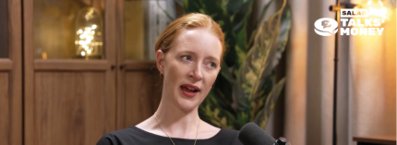
Iona Bain is an award-winning broadcaster and personal finance journalist who appears on BBC television and across the media. She’s a respected and trusted money expert with a knack for making complicated things easy to understand and is the author of books including Spare Change and Own It!.
“There’s no shame admitting that numbers don’t come naturally to you,” says Iona, who is also a a National Numeracy ambassador.
Iona tells us about how she has struggled a lot with numbers in the past. Despite her dyscalculia, Iona has developed some brilliant strategies to get to grips with numbers and look after her finances.
In this episode, she explores:
- How to gain confidence with maths and numeracy.
- Looking after your finances if you struggle with numbers.
- What dyscalculia is.
- How parents and carers can best support kids who have difficulties with numbers.
- The most common questions she hears about money and personal finances.
- What ‘financial literacy’, ‘financial well-being' and ‘financial inclusion’ all mean.
- The ‘credit card trap’ and how to avoid it.
- How to spot and protect yourself from financial and economic abuse.
- The pitfalls of outsourcing financial planning to AI.
- Trust, standards and regulation across traditional and new media – with an impassioned commentary on who you should be able to trust, when it comes to personal finances, and why.
- The best thing someone can do today to boost their finances.
Watch the interview here:
Hate Maths, Love Finance with Iona Bain

Welcome to Salad Talks Money with me, Jamie Veitch, and today's guest, Iona Bain, an award-winning broadcaster and financial journalist who has a knack for turning complicated talk about finances into something human, relatable, and real. Iona, thanks so much for joining us on Salad Talks Money.
Iona Bain:
Thank you for having me.
Jamie Veitch:
So first of all, I want to ask how people can look after their finances if they struggle with numbers.
Iona Bain:
Well, firstly, I should say that I am an ambassador for a charity called National Numeracy. I'm an unpaid ambassador, and it's a role that I have taken on to try to raise awareness of dyscalculia and also the fact that huge numbers of people out there struggle with numbers. And National Numeracy has lots of resources that can help people improve their relationship with numbers.
So I really recommend anybody who is unsure about where to turn to for help, to go on the National Numeracy website, you can take a test that's very quick and easy to do. It's not like an exam. It just tells you where you are at right now with numbers and areas that you could look to improve. And then you can use the website's resources to learn at your own pace, in your own time, in a way that's comfortable for you so that you can just feel more comfortable day to day with functional maths. It's not about getting to PhD level. It's not about understanding complex abstract concepts. It's just about feeling comfortable doing maths in your day-to-day life in a way that will hopefully benefit your finances and lots besides.
Jamie Veitch:
And this is something that you've been personally very frank about yourself. Some folk might not have heard the word dyscalculia. What does it mean?
Iona Bain:
Well, sometimes it's described as numbers dyslexia, which does partly explain what it is because there is sometimes this myth that dyslexia means that you are illiterate and that you can't read. We know that's not true. And in the same way, just because you have dyscalculia, it doesn't mean that you can't do any maths and that very simple arithmetic is beyond you. For example, I know that two plus two equals four. What I would say is that it's a struggle to process, understand, and remember numbers in the same way as other people can do, and that it will potentially take you longer to get to that more basic place, and it will be harder for you to do that compared to other people who might intuitively grasp numbers better.
So the way that it tends to manifest, it can be different for people, but there are a few commonalities. The first thing is that people can struggle to remember long sequences of numbers. So for example, I've never been able to remember any mobile numbers beyond my own, and that's only because I've had it since I was 15 years old. If I got a new mobile number tomorrow, I would really struggle to remember that. Likewise, if I get a code on my phone, if I can't use that code straight away, I have to literally say it out loud or write it down because I don't trust myself to remember it. And even when I'm on air sometimes, I will say a number and it's not the number that I meant to say, even though I have it written on my cue cards in front of me and somebody will say to me afterwards, "You are aware that you said X rather than Y," and I'm completely oblivious. It's like I've got this amnesia afterwards about what I've said on air.
Now, it only happens very occasionally because I am so hyper aware of this issue that I take all the steps that I can to try to prevent it, but I'm only human. So it does still happen on occasion. And I really do think it's because I lack that intuitive grasp of numbers.
And I think the other thing that people who have dyscalculia or just generally struggle with numbers, the thing that they will always talk about is this fear that they have around numbers. The fact that if they are put on the spot and asked to do some mental arithmetic, even if it's relatively simple, that pressure will cause them to freeze. And it may be something that they have tried really hard to learn. We all get our timestables drilled into us when we're younger, but those who are not comfortable around numbers will freeze in that moment and feel unable to do what's being asked of them, whereas others may have no issues with that at all.
So I think that gives us a clue as to how we can deal with dyscalculia or any kind of struggle that we have with numbers. It's to make sure that if we do have to do any maths, we take our time, we don't put ourselves under pressure, and that we don't feel like we're cheating if we're using a calculator or if we're checking what we've done with someone else. That's not a sign of failure. That's just you being conscientious and diligent.
Jamie Veitch:
Absolutely, indeed. And I'm sure that feeling of sort of freezing with horror will be familiar to many folk. And many people might think, "Wow, it's amazing how you have become a financial journalist, a personal finance commentator, writer of a couple of books as well, as someone who says that this has applied to you." You mentioned National Numeracy right at the start, and you mentioned all the suite of tools available on their website, but are there any other things that you did that have helped you to become more confident with numbers and finance?
Iona Bain:
Well, this will be particular to me, but it's not an option that will be open to everyone and not something that everyone will feel comfortable doing. But I do think that there was a real step change in my approach to this whole area when I came out, if you like, about my dyscalculia. And when I publicly talked about it on TV, I did a report for Morning Live, which is the show that I work on. I'm their resident financial expert and I pitched an idea about dyscalculia and I wasn't sure if they would go for it, but they did. And I got a brilliant response and that was one of the reasons why I then went on to work with National Numeracy.
But talking about my dyscalculia took all the shame out of it for me. I hid it throughout my whole career. When I moved over to finance, I knew that I had this issue and I knew that it was going to present some real challenges for me in this new line of work that I'd gone into because I don't have a financial background, my background is in music. And I hid it for the longest time, but talking about it openly has been a risk. It's meant that I've had to take on the potential criticism that dyscalculia isn't real or that it is just an excuse not to do maths in your day-to-day life, that it might mean that you're stupid or lazy. All of these unfair criticisms are going to come your way if you talk about this kind of topic.
But what outweighs that risk is the huge benefit of opening up, of helping others realize that they're not alone, that it is really normal and natural to struggle with numbers. It doesn't mean that you're stupid or lazy. It just means that you need a little bit of help. And I needed a bit of help. I was very fortunate throughout my career that I could turn to my dad, who infuriatingly is very good at numbers. So he was always there to help me sense check numbers and to give me some working models for getting more comfortable with numbers. And then obviously when I started working with National Numeracy, I discovered other tools are available. But we live in this golden age of online information and education now.
Jamie Veitch:
We do, yeah.
Iona Bain:
And it is totally possible for you to get to grips with any issue that you have in your own time for free. And that's what's wonderful about all those resources that are out there on the internet. I just implore anybody who is not sure to go out there and find out what's available and start that journey today because getting more comfortable with numbers has not just helped me feel better about my professional capabilities, but it has also helped me feel more confident in my day-to-day life. It's helped me feel like I can go out to a restaurant and be able to pay my share of the bill and calculate that with relative ease now. And also, I mean, I do arithmetic in all sorts of situations just to practice.
And that's another thing I recommend. I like swimming and I like to count the laps that I do in the pool and calculate how many laps I've done that are part of a mile and therefore how much of a mile I've swam. And that's just a very small example. It's not complex maths, but it's maths that just helps me get more comfortable with simple arithmetic and whatever works for you, whether it's doing counting whilst you're dancing or calculating ingredients when you're baking or cooking, whatever activity you enjoy in your day-to-day life, if you can bring some maths into that, then you're winning.
Jamie Veitch:
Sounds like you're making it fun when you do that as well.
Iona Bain:
Exactly.
Jamie Veitch:
And enjoying it rather than making it something that's challenging.
Iona Bain:
Yes, like you're back at school again.
Jamie Veitch:
Yeah, exactly. Exactly. But you mentioned your dad and someone who you could sort of sense check things with. And I wanted to ask you about how parents or carers with kids who are trying to help children get to grips with maths and with finances, because finances is so much broader than maths and many people, in fact, people who we've interviewed on this programme have said that personal finances shouldn't be just in the domain of maths when it comes to school. But when it comes to parents or carers who are trying to inculcate confidence with personal finances in the kids that they're looking after, are there any things that you think it's good for parents and carers to do?
Iona Bain:
Well, let's take numbers first. I think if your child is struggling or a child that you know is struggling, try to advocate for them when it comes to special needs support in the school because the only way that I could have passed my exams when I was at school was having that support from the special needs department and I got help and accommodation that was enormously helpful. I know that can be difficult. I know that sometimes these departments are very stretched and lots of demands are put on their resources and their attention, but try to advocate for your child and get them that support that they deserve because it will make a difference. It's not all on you as the parent. The school can do a lot to step up and help as well.
When it comes to personal finance, I'm often told that if we just have more financial education in schools, that would solve all the problems that we see when it comes to financial literacy in the UK. And I agree with that up to a point. I think of course it can be helpful. I think we need to be realistic about how much time schools can spend on personal finance as a subject. And even if you do think it is invaluable and important for children to be taught this subject, it's very difficult for teachers to be right across the whole financial landscape and have up-to-date understanding and knowledge of that in a way that will really prepare those young people for the real world. And even if they leave school with a brilliant understanding of how personal finance works in 2026, well, guess what? It's going to change in another 2 or 4 or 6 or 10 years time.
Jamie Veitch:
Oh, yes.
Iona Bain:
And there will be certain universal principles you can certainly teach young people such as the importance of compound interest, good debt versus bad debt, the importance of budgeting. Those things are classic hallmarks of good financial management, but there is a whole lot that young people will have to teach themselves. And that is just about empowering young people to go and find the right information and to know how to apply it to their own lives. And also for young people to have a confident sense of who they are in themselves and that they are not going to be buffeted by social pressures in a way that will then lead to them making bad financial decisions. In many ways, that's just as important as having a real grip of the nuts and bolts of budgeting and being able to understand how financial products work.
But as parents and carers, the most important thing that you can do is to be a good role model and to be happy talking about money in the house and not to treat it as a taboo. There are many people that I speak to now who've had to really work through a lot of financial issues as an adult that have arisen from the stigma that surrounded money when they were growing up. The sense that we don't talk about it. We don't talk about where it's come from. We don't really talk about what we spend the money on and we just kind of muddle through and hope for the best. And that unfortunately can lead to young people growing up not really understanding the value of money, not understanding how they could and should be spending it to really give themselves satisfaction and purpose in life.
And so I think that can be all avoided by being open. "This is how we earn our money. This is what we'd like to spend it on. This is what we think is important. What do you think is important? How would you like to spend your money? And what choices do you want to make with your money?" Because that's the key thing. It's all about choices and knowing that the choices are not infinite, but if you can make the right choices for you and put the money towards those choices in the right way, then that young person's going to get a really good start in life.
Jamie Veitch:
That's such an acute observation of the taboo and the sweeping it under the carpet and not talking about it. This is so, so common. And it must be really inspiring for a lot of people to hear a personal finance expert talk about the struggles that they've faced, for example, with getting to grips and numbers that you've talked about. And that must give people the confidence to actually ask you questions. And I wonder what questions come up the most in your post bag at the BBC when you're on television because you have this knack for turning something which is complicated, which is sometimes confusing, and that's the industry's responsibility for making it confusing rather than people's responsibility for not understanding. But you have a knack of turning things into something which is simple, easy to understand, but also highly human and relatable. So people must ask you things that perhaps they struggle with and they have been shy about asking. What comes up? What are the questions that people throw at you the most?
Iona Bain:
There are a few recurring themes that come up again and again. One of them is pensions. People feel very confused about how many pension pots they have and whether they should consolidate them and whether they ought to be changing the way that their workplace pension is invested. There is a lot more awareness of that now. Some people feel like they want their pension to be invested in a more ethical, responsible way. Others want that pension to grow as much as possible and they're concerned that it's maybe being invested in a way that's too cautious. These are quite new concerns that have come on stream, I think, since awareness has risen about automatic enrollment and the fact so many of us now do automatically have these workplace pensions. Sometimes we don't realise that they're there until we're made aware. And then we realise, well, they're all sat in these different places.
Are they working as hard as they could be? And are we overpaying for those pension pots? Are they charging high fees? So that's a question that I get a lot. There aren't easy answers for those questions about workplace pensions because it really depends on the guarantees and the benefits that come with those pots and what pension pot you would be planning to consolidate into and whether that represents good value or not. And that can be a very difficult assessment. And one issue that's come up in our conversation about numbers is the financial industry, as you said before, does not make it easy to compare costs. It doesn't make it easy to compare fees. And there's been a lot of progress on that, but much more work needs to be done. Otherwise, I'm sat over here as a journalist telling people to go and engage with their workplace pensions, and it just provokes more questions than solutions when people do that sometimes. But hopefully we will get progress.
The other thing that people ask me a lot about is credit and whether they need to get a credit card in order to improve their credit score. And again, this is an issue that I have yet to come up with a definitive answer for because some people I know have managed to get a mortgage without having to take out a credit card previously just by paying all their bills on time and being very, very reliable with their finances. But other people have really had problems with getting a mortgage approved, having not had a credit card and are credit invisible.
So my advice is usually if you want to really maximise your chances, then having a credit card is obviously the way to go, but you've got to make sure it's working for you and that you're managing it in a sensible way and that it doesn't kind of get the better of you, if you like. But I understand why so many young people especially are credit phobic and don't want to take out credit cards because they worry that if they take one out, then it's a slippery slope and they will end up spending much more than they intend to. So that's a big concern.
And then another issue that just comes up a lot now is whether you should be buying a house and whether you should be kind of relying on that as a financial investment for the long term because the maths on that has changed in recent times in certain parts of the country. We've got rising interest rates, we've got property values in some places stagnating. The era where you could make lots of money over the long term potentially from flipping houses, I think that maybe is over and that's quite a difficult paradigm shift for people to come to terms with. But at the same time, people really don't want to stay stuck in rented accommodation if they can avoid it because of the insecurity that comes with that. Even with changes to no-fault evictions, people know that if they have their own home, they have that opportunity to pay down their housing costs over the long term and build up that security for themselves. They just can't rely on it to be a gold mine anymore. So those are some of the most common issues that come up for me.
Jamie Veitch:
I'm not surprised that those come up a lot. Those are sort of relating to lifetime goals, aspirations, house ownership, pension, being able to retire, and of course credit and debt. And you talked about the credit card trap, and you've done some work on that earlier this year. And you've also done a really hard hitting episode of Panorama earlier this year, which some folk will have seen. But for those who haven't, I wonder if you can just explain what the credit card trap is, those who haven't read your work on that.
Iona Bain:
Well, there are millions of people who take out credit cards every year, many of whom do so without any issues at all because they pay off the balance in full every month. But there are many who take out credit cards often with the best of intentions. They will be spending an amount that they feel they can afford and that they feel that they can pay back. And then lots of things happen that might mean that actually the credit card becomes a trap. It becomes something that they're no longer on top of.
One of those things is the credit card limit going up and sometimes people interpret the credit limit being increased as a sign from the lender that you can afford to spend more on your credit card and people get this subliminal message that actually I should be spending more on the credit card because my lender thinks that's fine. They've just approved me for 2,000 pounds more worth of credit. And that is a slippery slope for a lot of people. A lot of people end up just spending more on their credit card because the credit limit has been increased.
Another way that people can get trapped is that they end up just making the minimum repayment every month. And that of course means that they are not really paying off the balance in any meaningful way over the long term. And it means that the length of their debt, the amount of time it takes for them to pay off their debt, if it ever gets paid off, just increases so much. And the cost of it also, it can be potentially thousands of pounds more over the lifetime of that debt if they're simply sticking to the minimum repayments. And people are not necessarily understanding that really.
Of course now you have it on credit card statements that if you only make the minimum repayment, that this is going to make your debt more expensive and it's going to make it last longer. But people don't really understand what that means in pounds and pence. And if you break it down for them and present that to them, they are horrified and a lot of them probably wouldn't start down that path if they knew. But once you have started down that path, of course, it can be very difficult to get off it because then that's a sum that you can afford, that's what you've budgeted for, and you end up trapped by it and you feel unable to pay off more of your debt over time because the sacrifices and the trade-offs and sometimes the real hardship that that would entail in your life is just too great. So that is a massive element of the credit card trap.
And then another element that is slightly less well understood, I think, is balance transfer deals, which can be really helpful if you are looking to try to pay off your debt. But what I discovered doing Panorama was about half the people who use 0% balance transfer deals don't actually pay off the balance by the end of the interest-free period, and therefore they are back to paying interest on their debt again. And of course, credit card providers, they do know this and they're not just offering these deals out of the goodness of their hearts. They know a certain percentage of people will not be able to pay off that debt in time, because life happens, because they may have a big unexpected emergency come along that requires them to put money towards that instead. Or they're just not realistic about how much of that debt they can pay off in the interest-free period. And we're very optimistic human beings and it's one of the wonderful things about us, but it can also make us very vulnerable when it comes to our finances.
Jamie Veitch:
It really can, can't it? I mean, it's good to be optimistic, but it's also good to be realistic as well.
Iona Bain:
Exactly. Yeah.
Jamie Veitch:
And I think you touched on something which is really interesting there, you touched on the use of language. I mean, sometimes credit card providers use the phrase persistent debt, but what does that actually mean? Well, you've just described exactly what it means. And you show people what it means and you said people are horrified. We also have the terms financial literacy and financial inclusion, and financial wellbeing. Those sound good, warm, positive. What do they actually mean in practice? I mean, what actually do we mean when we're talking about financial literacy or wellbeing or inclusion? I don't know what you would say those should encompass or do encompass.
Iona Bain:
I think they are three different things. Financial literacy for me refers to your understanding and grasp of financial products and concepts. Whereas financial wellbeing is about your relationship with your finances, and that goes beyond the products and the concepts into your identity, your values, your lifestyle, and how much of your financial decision making is being driven by wanting to maintain your status, by peer pressure, by FOMO, by having to navigate 21st century consumer life, by having access to shopping 24/7 through your phone. All of these issues I think are encompassed within financial wellbeing. And the aim of everyone who wants to try to improve their financial wellbeing is to understand all those forces and influences that are at play in our lives and how they can make all of us feel like we have to spend more and we have to therefore borrow more perhaps in order to be acceptable in this world. And getting to grips with all that is not easy and it can touch on lots of painful issues relating to our family, our relationships, our own self-esteem. But nonetheless, it's non-negotiable. We have to engage with those issues.
And when it comes to financial inclusion, yet again, that is about whether or not financial products are actually working for the population or whether there is a certain section of society that are not just not benefiting from those products, but are being actively harmed by them and being kept in a situation in their life, which is a bit like the credit card trap, for example. It's clear that financial inclusion is not happening for a huge number of people who are having to turn to expensive credit. And in the process, they're being trapped by that expensive credit. And that's something I feel really strongly about.
Jamie Veitch:
And the government published a financial inclusion strategy last year. It consulted quite widely on that, including with organisations that advocate for consumers' rights and community finance providers and many, many, many more entities who have published a lot over the years, a lot of research over financial inclusion. But some people say that the financial inclusion strategy doesn't necessarily go far enough. I mean, you and I are not in the position of running government, so it's hard to comment from the sidelines sometimes and say, "What would we do if we had to make those choices?" But hey, what would we do if we had to make those choices?
Iona Bain:
It's interesting. I think there are the more obvious remedies and there are the less obvious remedies. On the more obvious side, and I'm not just saying this because this is the conversation that we're having today, but of course having more responsible, affordable lenders has to be part of the solution because we need to be able to give people that choice of lenders that they can turn to who are going to treat them fairly and ethically should they need that help. And I'm also a big advocate of credit unions. I think there could be more done to elevate credit unions, to give them more of a prominent position in society, in communities so that they can reach the people who need that support at certain times in their life.
I think there are less obvious remedies though that I feel quite strongly about, and this is just my personal view. I am not keen on having contactless limits on credit cards or debit cards removed because I think this is really distorting people's relationship with their finances. I think people are progressively losing touch with the value of money. And I'm not saying that this alone is what is driving debt in the UK. Obviously there are structural reasons why people fall into debt. Sometimes it's because they simply cannot survive without it. And I've seen this more and more in recent years, sadly. But there is also a real problem with people simply not keeping track of their money and contactless spending enables that. And it has been a very deliberate innovation from the financial industry that very much benefits the providers, but I don't think it's to the benefit of the consumers.
And I think that is one simple solution that I would personally be in favour of if I was in power, which will never happen of course, but it's about those little things that we can do to just put more friction back in people's finances. I think we've gone a little too far in making finance as easy and convenient and frictionless as possible. Now I think we need to put some of that friction back in.
Jamie Veitch:
Thank you, Iona. We talked earlier about credit scores a little bit, and you talked about people who have thin credit files as well. And some people will be thinking, "Well, I see products advertised at me that tell me that they will improve my credit score or I'm told I should do this, that or the other. I just need some simple, clear advice on how I could improve my credit score." What are the key things in your opinion?
Iona Bain:
Well, try to get the basics right. Paying your bills on time every month makes a difference. Also, getting on the electoral register for lots of people, that doesn't make sense. Why should that be a big contributor to your credit score? But it is a contributor. So even if you don't intend to vote, just get on the electoral register and that should help. Doing those basic things without even having to take out credit is your first step. The second step, as I said earlier on, is taking out a credit card doesn't have to be scary. It doesn't have to mean you end up on a slippery slope towards debt. Just have to have very, very clear rules and boundaries in place and go into it clear-eyed.
The first thing you can resolve to do is that you can choose to just put certain fixed expenses on your credit card every month and then set up a direct debit from your main bank account to pay off that credit card in full every month. And doing that over a long period of time, should you need to have a good credit score in the future for other goals, will stand you in good stead.
And the other thing to bear in mind is that in the UK, we have Section 75 protection on all purchases over 100 pounds, which means if anything were to go wrong with that purchase, the company goes bust or it doesn't turn up or it's not as described, then you have more rights if you buy that product on a credit card than if you buy it on a debit card. I'm personally not a massive fan of that discrepancy, but it is what it is. So the sensible thing to do if you know that you have a big purchase coming up that's over 100 pounds is to budget for it, either knowing that the money can come from your earnings or that it can come from savings that you've built up, then use your credit card to make that purchase, then pay off straight away. Again, just doing that over time will stand you in good stead and will avoid you getting into that credit card trap that we talked about earlier on.
Jamie Veitch:
So it's using the protection that's there, but without falling into the pitfalls and the trap.
Iona Bain:
Exactly.
Jamie Veitch:
Super. I want to come onto a really serious subject, which we're only going to have a small amount of time to touch on. And I know it's something that you have covered in more depth elsewhere, but it is the topic of economic and financial abuse. How can people spot and protect themselves from financial and economic abuse?
Iona Bain:
Well, I think first of all, we need to normalise financial independence within relationships and help people understand that you do not have to share absolutely everything with a partner and it's perfectly acceptable for you to have your own financial means. And that could be savings, that could be a separate bank account, that could be your own credit card. Ideally, all of those things will put you in a really good position, whether the relationship thrives or not, that's enabling you to have basic protection against the worst case scenario.
And I think the other thing that people can definitely look out for is those early signs of controlling behaviour, which can tip over into financial abuse. Nobody has the right to tell you how to spend your money. Nobody has the right to demand that you take out joint financial products with them because when that happens, you then have joint liability for those products. So for example, if someone has a joint credit card with you and then they run up a debt, that is in your name and you could become liable for that. That's when you get problems. So it's perfectly fine for you to not have those joint products, especially if you have concerns maybe about that partner's previous financial behaviour or their current behaviour towards you in the relationship. And I think if we can just normalise those conversations and help people understand that it's not unromantic to have that financial independence, it's just a basic precaution that we can all take to ensure that people are protected in relationships.
Jamie Veitch:
Okay. Thank you ever so much for that. Iona, I want to ask you then about how people are treating AI when it comes to their finances. We are hearing some stories and perhaps some of these are a little bit exaggerated, but perhaps they're not, about people outsourcing financial decisions to AI, asking AI tools how to achieve their financial goals or get out of their financial problems. And I wonder what's your view on the pros and cons of AI?
Iona Bain:
I think the genie is out of the bottle when it comes to AI and people using it to try and improve their finances because the really good thing about AI is that it is non-judgmental. It's going to be able to answer questions that people feel embarrassed about asking elsewhere. And people can treat AI like a sounding board and it can cut down on a lot of the legwork that people would have to do online otherwise if they have a particular problem or query. I think of course the main risk with AI is that the information that we're getting is not all completely accurate, that it's not all fact-checked. And so you do have to take some precautions.
The first is that you should always ask for the AI machine that you're using to give you its sources when it's answering your question, to make it clear that it has taken that information from somewhere and that other resource is somewhere that you trust. It's a website, an organisation, an institution that has got a track record, that has got status that it can actually provide that accurate information for the AI to then feed to you.
I think as well, it's about knowing the limitations of AI in the sense that it can sometimes obviously tell you what you want to hear and it can feed into your existing bias. So being alive to that is really important. And getting a second opinion, even if AI tells you something that sounds like it could be quite sensible and it sounds like it could be quite helpful, maybe not totally relying on it, asking somebody that you know if you are able to get advice, which of course is not possible for a lot of people, but if you are able to get any professional advice, especially for those more complex questions about pensions and investments, that's absolutely essential, but just not taking the AI answer as gospel in every case.
Jamie Veitch:
I suppose we could say there's also, when it comes to humans, there are people we can trust, there are people with journalistic rigour who have an editor or who have qualifications and there are other people who just speak nonsense or promote the latest cryptocurrency, get rich quick scheme as well. So humans can make stuff up as can AI.
Iona Bain:
Well, this is true and I am biased in saying this obviously, but this is where I think the media still has a really important role to play. As you say, journalists have to fact-check what they write and report. They have to work with editors who will sense check it. They have to be legally careful as well with what they write. And they also have access to a lot of resources because of their contacts and their existing knowledge that you don't necessarily get from people who are just talking about this stuff maybe from their bedroom.
Jamie Veitch:
Indeed.
Iona Bain:
So I think there is still a role for the financial media to play in all this.
Jamie Veitch:
I'm going to put you on the spot here. Does it frustrate you though sometimes that people who broadcast on non-broadcast channels, so who put something out that's perhaps a video but aren't on terrestrial TV, aren't regulated in the same way as broadcast media is regulated?
Iona Bain:
I think sometimes I get frustrated when people are not evaluating the work that I do on the BBC, for example, they're not evaluating that on its own terms where we have to be very careful not to be political. We have to be careful not to take sides on political issues. I have to be careful not to let my own personal opinions come through in what I'm talking about. I have to be fair-minded. I have to try to think about all the viewers that are watching at home and how my advice could help them and not put a particular slant on it.
And obviously as well, we have to make sure it is completely accurate. We have to make sure it's fair. We have to make sure it's legally watertight, all those issues. Sometimes people don't appreciate how much work goes into making that happen and standing all that up as opposed to if you can just make a video from your bedroom, then you are not subject to any of those same guidelines and restrictions. And in some ways you might be more freer to say what you think, but with that comes the risk that you end up kind of veering into areas that are not actually your expertise, that may not be fully accurate.
And of course there are ethical issues as well. I mean, we are seeing now people promoting cryptocurrency and other types of investment that they themselves are personally invested in. And that is a big no-no for a financial journalist. We had it drilled into us really throughout our careers. I'm speaking on behalf of me and all my peers now, but we've had it really drilled into us that if you have any financial interest in what you're writing about, you have to declare that. You have to be very careful to not let that interfere with your work. And if it is seen to interfere with your work, I mean that's insider trading really.
Jamie Veitch:
Indeed.
Iona Bain:
And it's a criminal offence. It seems that there is a lot more criminality that could happen online as a result of that lack of regulation. But I mean, I've given up even hoping that we might get some kind of proper regulation of what is written and talked about on social media, not least when it comes to scams because they are absolutely blossoming and the social media platforms are making more money from advertising scams than they are from all the actual credible financial coverage that there is out there combined.
So I've given up hope that we're going to get proper regulation in that respect. And therefore it's on you as the consumer of that information to just get wise to what's going on, to understand whether that person has got an agenda and to be able to make up your own mind and decide for yourself.
Jamie Veitch:
That's a real call to find people that you trust and see why they're trustable and trustworthy and then learn as much as we can to take that responsibility forward.
We're going to turn to the topic of paper money. It's very emotive and also you can count how much you've spent, which goes back to something you talked about earlier. But there's been a move to put new figures on bank notes, actually wildlife on banknotes. But of course in the past we've had public figures on banknotes. Now, if it was up to you who you would put on a banknote, and I'm not talking about wildlife, I'm actually talking about a person. They could be alive or dead. They could be fictional or real, but I wonder who you would choose to put on a banknote.
Iona Bain:
Okay. So this is going to sound a little left field, but bear with me. Dame Patricia Routledge, who passed away recently.
Jamie Veitch:
Yes, indeed.
Iona Bain:
And as well as being just a brilliant performer and by the sounds of it, a very decent human being, she of course is well known for the legendary character Hyacinth Bucket, or Bucket on Keeping Up Appearances. And it was a show that I remember watching when I was growing up, but I am very tickled to hear that it now has something of a cult following among millennials and Gen Z folks. And I think the reasons are that even though watching it now, it does feel quite dated in some respects. I mean, her house is just so chintzy, it's amazing, but it's a really timeless character because it's about somebody that is really aspiring to be more than she is, who wants to climb the social ladder and wants to keep up appearances as the name of the show suggests. And I feel like there's a character for every generation that's like that. It was previously Margo from The Good Life, Dame Penelope, who also passed away recently.
Jamie Veitch:
She did.
Iona Bain:
And then there's Amanda from Amandaland, that's kind of this generation's version of that same archetype. And I just feel like it's very British for us to want to pretend to be more than we are. But what's great about Hyacinth is that even though she desperately wants to be in control of her destiny, life has got other plans for her. She always ends up in situations where she's not totally in control. And I feel like it does have something to teach us all about the perils of wanting to climb the social ladder and to maintain your status or to achieve a higher status in life. Even though lots of good things can come with wanting to better yourself, it can also end up creating a bit of a prison of your own making. And I feel like that's what that show teaches us, the perils of doing that. So that's why I would have her on the bank note because as well as celebrating her as a great performer, I feel like her character has a lot to teach all of us.
Jamie Veitch:
Brilliant. What a great suggestion. Thanks so much for that, Iona. And I mean, I think we learn so much from humour and sometimes humour allows us to have the conversations that we need to have in a way that makes us a little bit more comfortable about having those.
Iona Bain:
I couldn't agree more.
Jamie Veitch:
Great stuff. So I'm going to give you the opportunity to tell us a little bit about both of your books in a second and where people can find them. But before we do that, I wonder if you could sort of encapsulate the best thing that people can do to sort of support their financial goals, boost their financial wellbeing, if you like, what would it be? And I mean, obviously it's going to be personal, but what should people take away from this conversation?
Iona Bain:
I think it would be really useful for anyone at any stage of their life to sit down and work out what their top five priorities are and their top five values in life, how they want to spend their time, what gives them joy, where they want to be in the future, what kind of person they want to be, what kind of life they want to live. And to really just narrow it down to five things that you feel that your life should be about, it's really hard. It's a really hard thing to do. I remember reading a few years ago a book called 10,000 Hours, and the name of the author escapes me right now.
Jamie Veitch:
Is it Oliver Burkeman?
Iona Bain:
That's the one. Thank you. Thank you for reminding me. Yes. So I remember reading that book and it completely changed my outlook because it made me realise that I was a goal-a-holic, I was a list-a-holic, I was a to-do-a-holic. I just constantly was making lists of things to do for myself and never ever making any meaningful progress through them because it kind of gave me a license to procrastinate, to put things off. But once I narrowed down my life to just core priorities that I wanted to focus on, that then gave me a focus for my finances as well as for my time and my energy more generally. And it meant that I could strip away all the other things that I realised ultimately just did not matter to me. And it meant that I could then focus my savings goals, my pension goals, and just my day-to-day budgeting in a way that made sense for me.
So just making that list is kind of absolutely core when you are deciding what to spend your money on, when you're deciding what to save up for, when you're deciding how to use your credit card and what you want your pension to achieve in the future. I've kind of made the decision recently that when I retire, I would like to spend my time then traveling. And hopefully now the time that I spend staying healthy and having a good balance in my life will enable me to have a really nice retirement and will enable me to go and travel and be in good enough health to do that. But that has been a real liberation kind of understanding that. And it has meant that at this point in my life, that's maybe not so much of a priority because I know in the future that's something that I will have more time and hopefully the money to do. So yeah, making a list of those top five values and priorities, I think that will have a benefit for everyone, not just for their finances, but for their whole lives hopefully.
Jamie Veitch:
Super. Well, thank you ever so much for that. So people can find you online. You have a website. Of course, they can see you on television, on the BBC. They can listen to your podcast as well.
Iona Bain:
That's right.
Jamie Veitch:
And they can read your books. You've got two books out, Own It! and Spare Change. Is that right?
Iona Bain:
Mm-hmm.
Jamie Veitch:
What's in the books?
Iona Bain:
So Spare Change, I wrote that about 10 years ago now, and it's a millennial money handbook. It's got lots of beautiful illustrations throughout, lots of inspirational quotes. And it's there to really just help you get to grips with your relationship with money, understand concepts that you might not realise have a bearing on your finances, and do so in a way that will hopefully be lighthearted and digestible.
Own It! is a book that is all about how you can invest your way to a better future. And I wrote it as a fun and friendly guide for any young person or anyone of any age who is not sure about how to invest money, is not sure whether it's the right thing to do, and is very overwhelmed when they look at the whole investing landscape out there. I'm kind of using the book to guide people through that landscape and to first of all explain why investing matters, how you can make it work for you, and then taking people through all the options in the second half of the book.
And I also share my investing diary from lockdown when I was getting a little bit more into picking individual stocks and doing that side of investing. And what I learned doing that, which was really fascinating because it's one thing for me to say, "Oh, make sure you diversify and take the long view," and all the rest of it. But actually engaging with some of those stock picking apps and realising some of the pitfalls that can come with that, talking about it in quite honest, hopefully funny detail about that in the book, hopefully helps people understand that actually investing, it's not a get rich quick scheme, it's something to do for the long term. And you've got to just stick with that roller coaster through the highs and lows and not pay too much attention to all the scary headlines out there. Because if you did do that, then you would be constantly freaking out.
Jamie Veitch:
You really would, wouldn't you? An absolute state of anxiety.
Iona Bain:
Exactly. No, you've just got to stay the course and stay focused on, as I said before, your values and what you're investing for, for the future, and keep calm and carry on.
Jamie Veitch:
Fantastic. Okay, that sounds brilliant. Thanks so much for that, Iona. Where can folks find you?
Iona Bain:
So I am on Instagram @ionajbain. I have my podcast, A Little Bit Richer, which you can find on all good podcast platforms. And Spare Change and Own It! are both available to buy from Amazon.
Jamie Veitch:
Super. Well, Iona Bain, thanks so much for joining us on Salad Talks Money.
Iona Bain:
Thank you very much.
Or find it on YouTube, Spotify, Apple Podcasts, Amazon Music and other podcast platforms – just search for Salad Talks Money.
What next?
- Loved this interview? Please share it with friends or family who would find it useful, and subscribe so you get new episodes of Salad Talks Money as soon as they’re released. And if you have a question you would like us to ask a future guest, please send us an email.
- Watch and listen to other episodes of Salad Talks Money, exploring practical topics including budgeting, understanding money, credit scores, saving for the future, and credit and debt – all in clear language.
- More about Iona, her books, journalism and podcasts https://ionajbain.co.uk
Salad Talks Money is brought to you by Salad, a social enterprise committed to financial inclusion and recently honoured with a King's Award for Enterprise for our outstanding achievement in innovation, and presented by Jamie Veitch.